
Is Eating Banku Every Day Healthy?
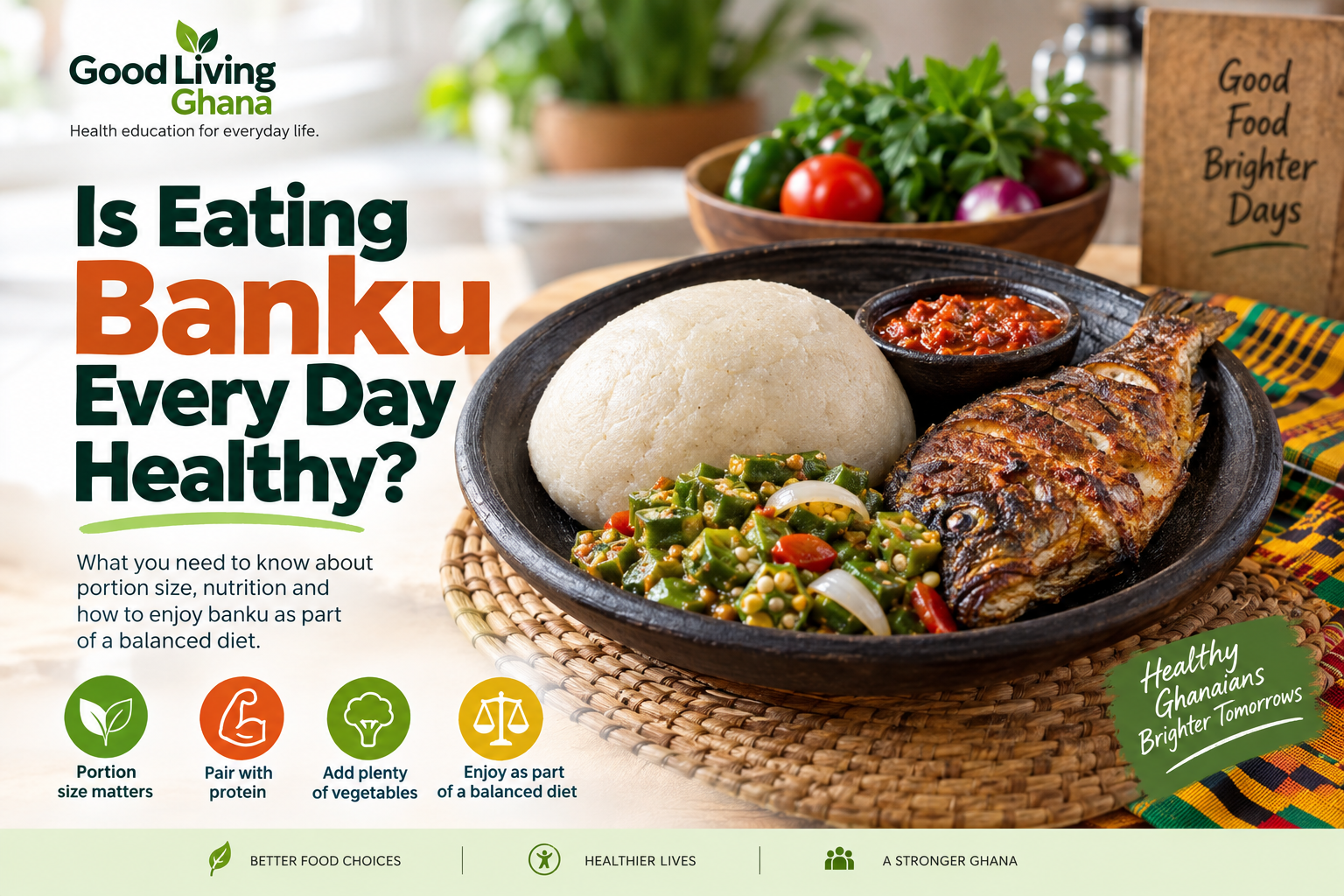
Banku is one of those foods that feels like home for many Ghanaians. Whether it is served with okro soup, pepper and fish, groundnut soup, or grilled tilapia, banku is a regular part of many Ghanaian meals.
But an important question is: Is eating banku every day healthy? The short answer is yes, banku can be part of a healthy diet, but eating it every day does not automatically make your diet healthy or unhealthy. What matters is how much you eat, what you eat with it, and what the rest of your diet looks like. What is banku?
Banku is traditionally made by fermenting and cooking a mixture of maize dough and, in some preparations, cassava dough. Because it is mainly made from starchy foods, banku provides carbohydrates, which are an important source of energy for the body. However, banku by itself does not provide everything your body needs. It contains relatively little protein and is not particularly rich in many vitamins and minerals compared with vegetables, legumes, fish and other nutrient-dense foods. That is why what you eat with your banku matters.
Can you eat banku every day? For a healthy person, there is no general rule saying that banku must not be eaten every day. The bigger concern is eating large portions of banku while regularly consuming meals that are low in vegetables, protein and other nutrient-rich foods. For example, eating a very large ball of banku with a small amount of fish and very little vegetables may provide plenty of calories and carbohydrates without providing enough protein, fibre and micronutrients.
On the other hand, a moderate portion of banku served with fish, plenty of vegetables and a nutritious soup or pepper sauce can fit comfortably into a balanced diet. The portion matters One of the easiest ways to make banku part of a healthier diet is to pay attention to portion size. Banku is energy-dense because it is primarily a carbohydrate food. If your portion is consistently much larger than your body's energy needs, the excess energy can contribute to weight gain over time.
You do not necessarily need to stop eating banku if you are trying to manage your weight. Instead, consider reducing the portion and increasing the amount of vegetables and protein in the meal. For example, rather than making most of your plate banku, aim for a reasonable portion of banku alongside fish or another protein source and plenty of vegetables. What should you eat with banku? This is where you can make a big difference. Good options include: Grilled, baked or steamed fish Eggs Beans Lean chicken Okro Garden eggs Kontomire Cabbage and other vegetables Tomato, onion and pepper-based sauces Fish is particularly useful because it provides protein and, depending on the type of fish, beneficial fats and important micronutrients. If you enjoy banku with pepper and fish, you do not necessarily have to abandon the meal. Instead, focus on the quality and quantity of the ingredients. What about banku and okro soup? Banku with okro soup can be a nutritious Ghanaian meal. Okro provides fibre and various vitamins and minerals, while fish or another protein source can provide protein.
The amount of oil, meat and other ingredients used in the soup also matters. A nutritious soup can become considerably higher in calories when large amounts of oil or fatty meat are added. Again, balance is the key. Does banku cause diabetes? Eating banku does not mean that you will automatically develop diabetes. However, regularly consuming large portions of carbohydrate-rich foods while consuming excess calories overall can contribute to weight gain, and excess body weight is an important risk factor for type 2 diabetes.
For people who already have diabetes or are at high risk of developing it, portion control and the overall composition of meals become especially important. You do not necessarily have to remove traditional Ghanaian foods from your diet. Instead, learn how to build balanced portions around them. What if you eat banku every day?
If banku is your everyday staple, the main thing to consider is variety. Your body needs a wide range of nutrients, and relying heavily on one staple can make it easier to miss out on certain nutrients. You can rotate your carbohydrate sources throughout the week. For example, you might have banku on some days, while having yam, plantain, brown or parboiled rice, sweet potato, kenkey, beans or other staples on other days. Variety makes your diet more nutritionally diverse and can also make meals more interesting. So, should you stop eating banku? Not necessarily.
Banku is part of Ghanaian food culture, and there is no need to label it as a “bad food.” The healthier approach is to look at the entire meal. A simple way to remember it is: Moderate banku + enough protein + plenty of vegetables + reasonable amounts of healthy fats = a more balanced meal. You can enjoy your banku without feeling guilty. The goal is not to eliminate traditional foods but to learn how to eat them in a way that supports your health. The Good Living Ghana takeaway Banku can absolutely be part of a healthy Ghanaian diet, even when eaten regularly. The problem is usually not the banku alone. Portion size, what accompanies it, cooking methods, overall calorie intake and the variety of your diet all matter. So the next time you sit down to a plate of banku, don't just ask, “Is banku healthy?” Ask: “How much am I eating, what am I eating it with, and does my overall diet give my body what it needs?” That is where healthy eating really begins. Good Living Ghana Health education for everyday life.