
Koobi and Momoni: Could Too Much Salt Be Raising Your Blood Pressure?
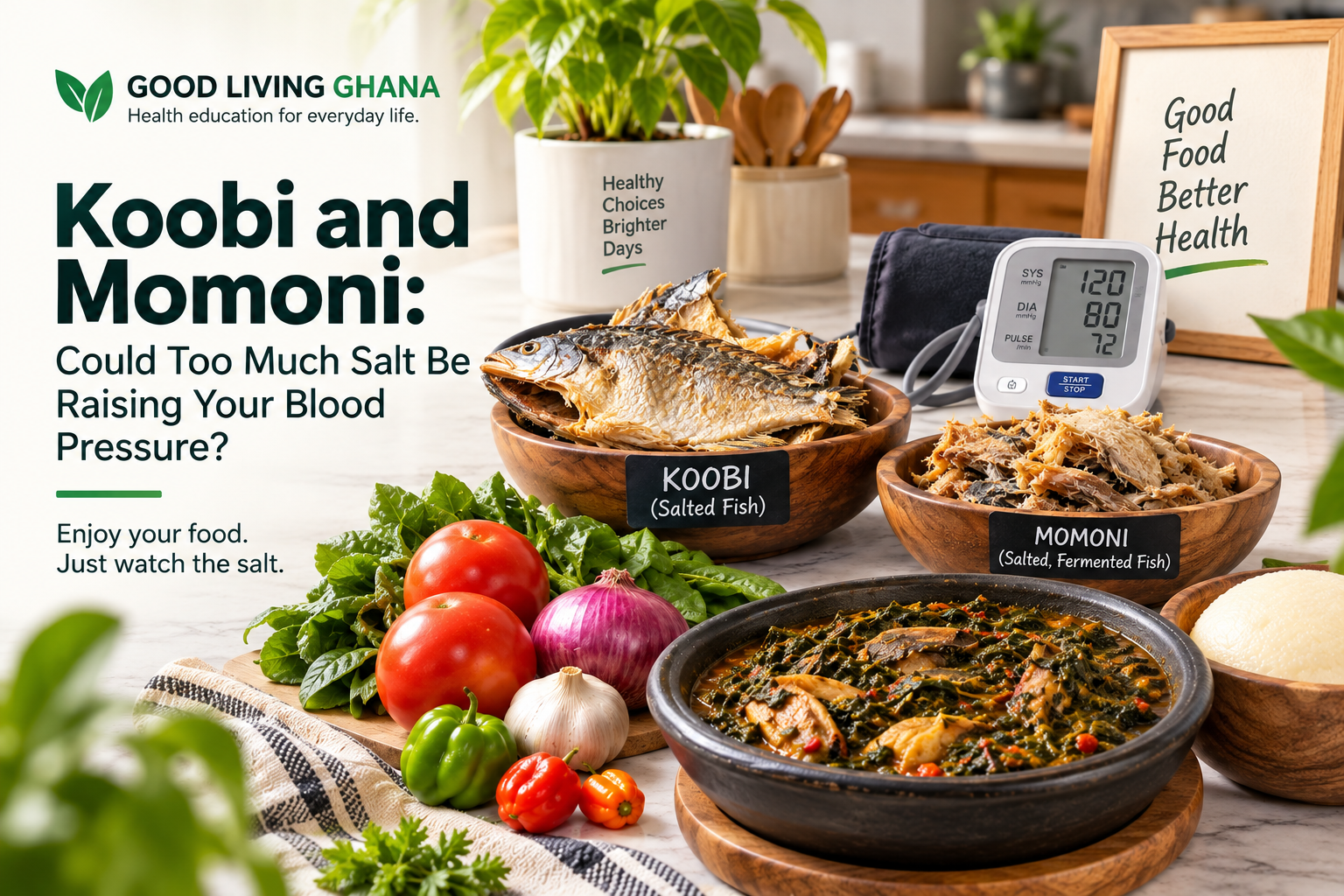
Koobi and Momoni: The Salt You May Not Notice
Koobi with kontomire stew. Momoni in your garden egg stew. A little salted fish added to soup can completely change the taste of a Ghanaian meal. For many of us, these foods are part of everyday cooking. But there is one thing we should pay more attention to: the amount of salt that comes with them. Koobi and momoni are preserved using salt, which means they can contribute significantly to the amount of sodium in a meal. When you combine them with additional salt, seasoning cubes, salted ingredients and other processed foods throughout the day, your total sodium intake can add up quickly.
So, what does too much salt do to your body? Your body needs some sodium to function properly. Sodium helps with things such as fluid balance, nerve function and muscle function.
The problem is too much sodium. When there is excess sodium in the body, more water can be retained. This increases the amount of fluid circulating inside the blood vessels. As the volume of fluid increases, the pressure against the walls of the blood vessels can also increase. That can contribute to high blood pressure. And high blood pressure is not something to ignore. When blood pressure remains high for a long time, it can place extra strain on the heart and blood vessels and increase the risk of serious cardiovascular problems, including heart disease and stroke. Does this mean you should stop eating koobi or momoni? Not necessarily.
Koobi and momoni are not automatically unhealthy simply because they contain salt. The bigger issue is how much you eat, how frequently you eat them, and how much salt you are getting from the rest of your diet. The goal is not to fear traditional Ghanaian foods. The goal is to enjoy them wisely. If you are using heavily salted fish in your meal, you may not need to add as much extra salt. You can also balance your meals with fresh vegetables, fruits, beans and other minimally processed foods. And if you have been diagnosed with high blood pressure, paying closer attention to your sodium intake is particularly important.
How much salt is too much? The World Health Organization recommends that adults consume less than 5 grams of salt per day, equivalent to less than 2,000 mg of sodium. This includes salt from all sources—not just the salt you add at the table. That is why it is important to look beyond the salt shaker. The salt in your koobi or momoni, seasoning cubes, processed foods, sauces and other ingredients can all contribute to your daily intake.
The good news Reducing salt can make a real difference. Evidence reviewed by WHO shows that even a modest reduction in salt intake can lower blood pressure, including in people who do not currently have hypertension. So you don't have to give up the foods you love. Instead, start paying attention to portion size, frequency and the amount of additional salt used when preparing your meals. The Good Living Ghana takeaway The fish isn't the enemy. Too much salt is the concern. Koobi and momoni can remain part of your diet. Just remember that because they are salted foods, they should be enjoyed thoughtfully—especially when other salty ingredients are also part of the meal.
Your everyday food choices may seem small, but over time, they can make a big difference to your blood pressure and overall health. Enjoy your food. Enjoy your culture. Just watch the salt. GOOD LIVING GHANA Health education for everyday life.